
After the Storm: A Homeowner's Guide to Roof Damage and Insurance Claims
The winds have died down, the hail has stopped, and the sun is finally breaking through the clouds. For homeowners in Urbana, the aftermath of a storm can be just as stressful as the event itself. The first question that often comes to mind is, "Is my roof okay?" followed quickly by, "If it's not, what do I do now?" The uncertainty of dealing with potential damage and navigating the complexities of an insurance claim can be overwhelming. But you don't have to go through it alone.
This guide will walk you through the essential steps to take after severe weather, from identifying damage to understanding the insurance process. We'll provide clear, actionable advice to help you protect your home and restore your peace of mind.
Step 1: Safety First, Then Assess from the Ground
Before you do anything else, prioritize your family's safety. Check for downed power lines, broken glass, and other immediate hazards around your property. Once the area is secure, you can begin a preliminary assessment of your roof's condition—but do it from the safety of the ground.
Never climb onto a potentially damaged or wet roof. Instead, walk around your home and yard, looking for obvious signs of trouble:
- Missing or Damaged Shingles: Look for shingles that are cracked, curled, or completely missing. Check your yard and gutters for shingle debris.
- Dents and Dings: Hail damage often leaves noticeable dents or pockmarks on shingles, gutters, downspouts, and roof vents.
- Granule Loss: Severe storms can strip away the protective granules from asphalt shingles, leaving them looking 'bald' in spots. You might see these granules collecting in your downspouts.
- Flashing and Seal Damage: Check the metal flashing around your chimney, vents, and skylights for any signs of lifting or damage.
Document everything you see with photos and detailed notes. This initial evidence will be crucial when you contact your insurance company.
Step 2: Get a Professional Inspection and Document Everything
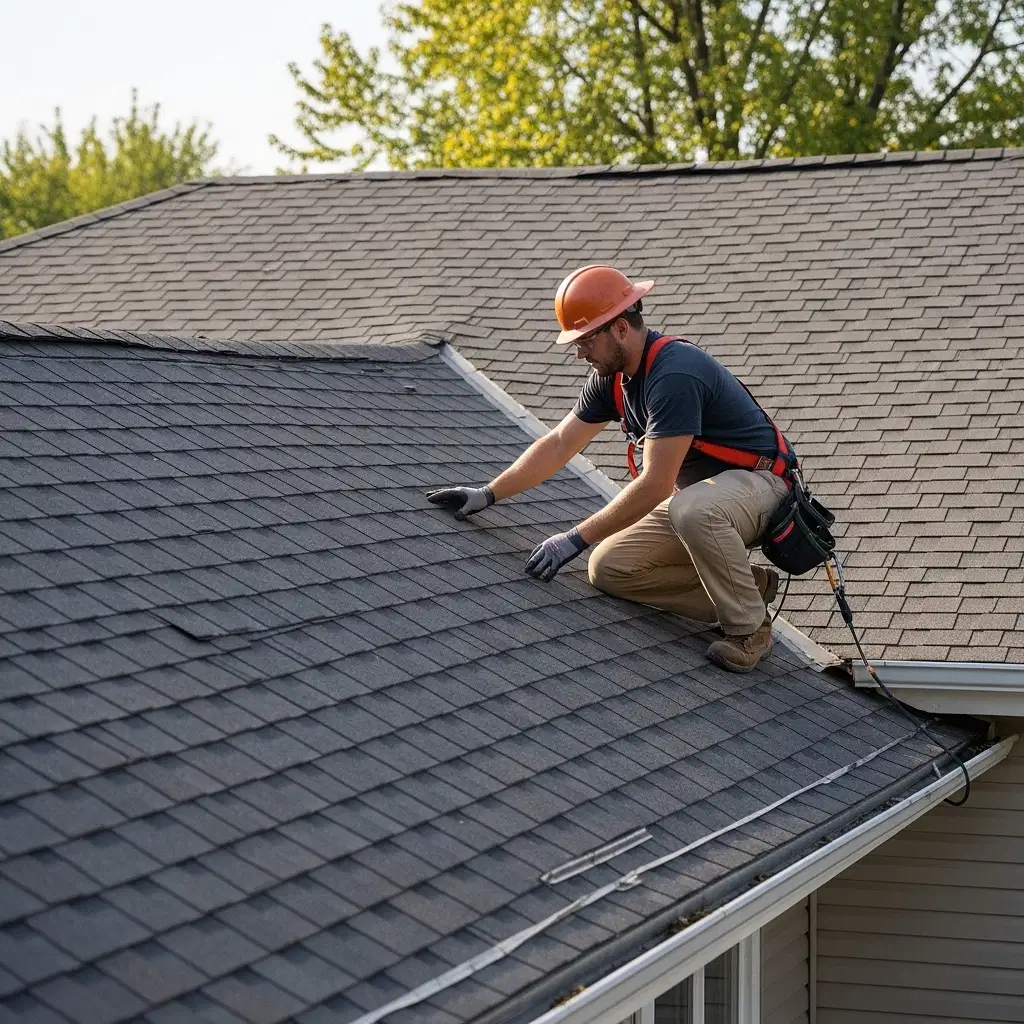
While a ground-level check is a good start, it won't reveal the full extent of the damage. The unique challenges of Prairie State weather mean that subtle issues like hairline cracks or lifted seals can lead to significant problems later, especially with winter ice dams or the spring thaw. This is where a professional inspection becomes invaluable.
A qualified roofing expert has the training and equipment to safely assess your entire roofing system. At Frontline Group, we leverage advanced technology to provide a comprehensive and accurate evaluation. Our Certified AI Roof Inspections use drone technology and intelligent analysis to detect even the smallest signs of hail or wind damage, creating a detailed, unbiased report that is incredibly useful for insurance claims. This level of precision ensures nothing is missed and provides your insurer with the clear, objective evidence they need to process your claim efficiently.
Step 3: Navigating the Insurance Claim Process
Dealing with insurance can feel like a full-time job, but understanding the process can make it much smoother. Here’s a typical breakdown of the steps involved:
- Contact Your Insurer: As soon as you have documented the damage and had a professional inspection, contact your insurance provider to file a claim. Have your policy number and documentation ready.
- Schedule the Adjuster's Visit: Your insurance company will assign an adjuster to inspect the damage. It's highly recommended to have your trusted roofing contractor present during this visit. Your roofer can point out specific damages the adjuster might overlook and ensure the assessment is fair and complete, based on local building codes and material costs.
- Review the Adjuster's Report: You will receive a report detailing the scope of work and the estimated cost of repairs your insurer has approved. Review this carefully with your contractor to ensure it covers all necessary work to restore your roof to its pre-storm condition.
- Choose Your Contractor and Begin Repairs: Once you and your insurer agree on the scope of work, you can sign a contract with your chosen roofer. Reputable contractors will never pressure you to sign before your claim is approved. They will work from the insurance-approved scope, ensuring a seamless process for your roofing installation & repair.
Conclusion: Your Partner in Storm Recovery
Recovering from storm damage is a process, but with the right approach and the right partner, you can navigate it with confidence. Remember to prioritize safety, document everything, and get a professional inspection to understand the full scope of the damage. A reliable, local contractor is your most important ally, providing the expertise needed to both repair your home and assist with the insurance process.
If your home has been affected by a recent storm, don't wait for a small leak to become a major problem. Contact Frontline Group LLC today for a thorough, no-obligation inspection in the Urbana area. We’re here to provide the service, precision, and quality you need to protect your home. Let us help you get back to normal, quickly and correctly.